Small group
$20per session
$160/mo at 2× a week · $240/mo at 3×
- Coach-led sessions with 3–10 athletes
- Speed, strength and agility on a phase-based plan
- The format most athletes start in

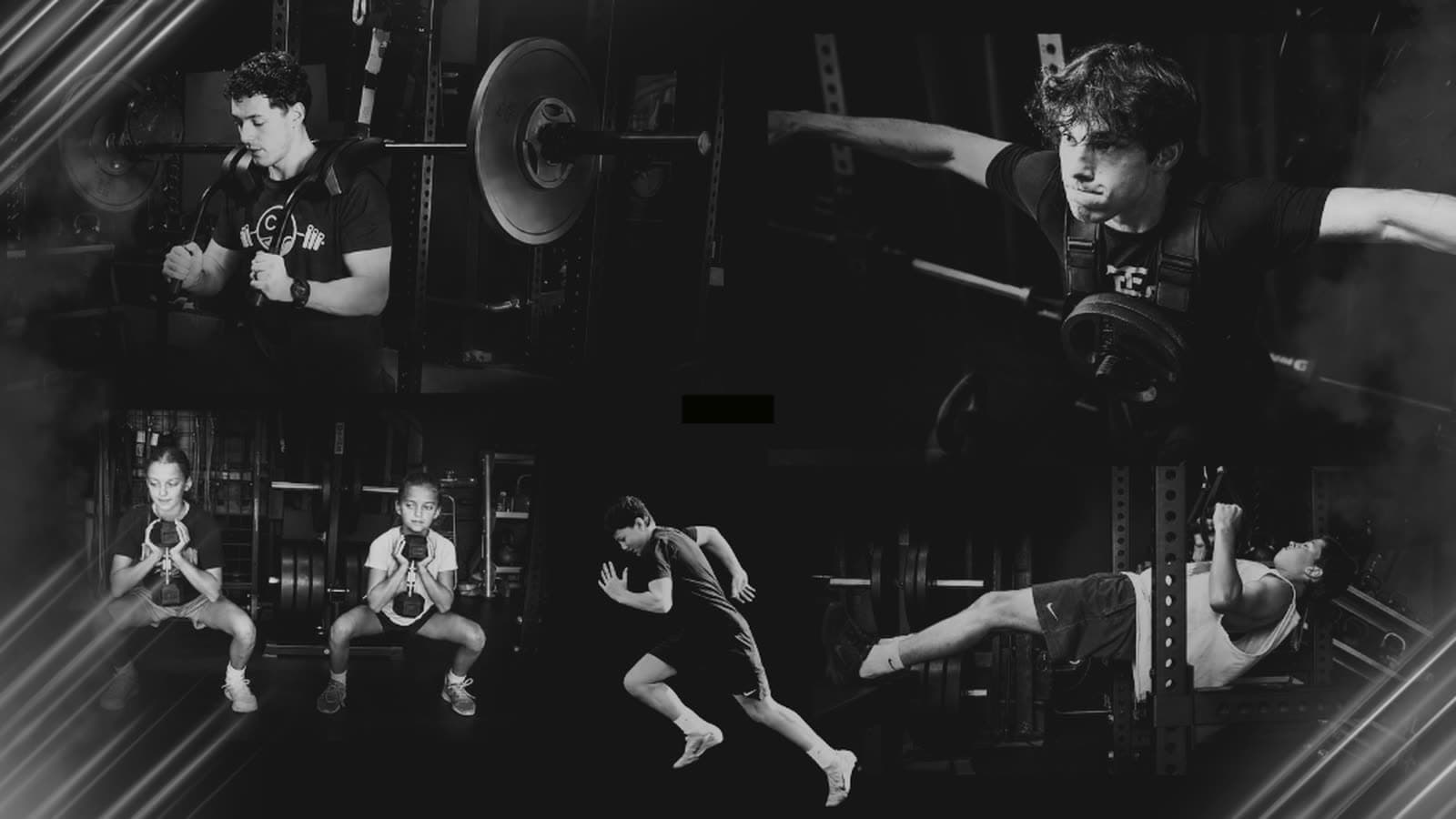
Youth sports performance · Ages 8–18 · Clackamas County, OR
Watch this before you sign your athlete up for anything.
If you're a parent of an athlete between the ages of 10 and 18 years old, this video is going to show you how we help young athletes develop the physical skills that allow them to perform at the next level. Because it's our goal to help your athlete become the kind of kid that stands out on the field or court.
A lot of parents and athletes we work with come in saying the same exact thing: my kid's just not as strong or as fast as the other kids on their team. And that can be super frustrating. As a parent, you want to give your kid every opportunity to play the sport they love at the highest level possible.
We've helped hundreds of athletes develop the strength, speed and power that actually gets transferred to sport. But don't just take it from me — here's a couple of thoughts from the athletes within our program.
"Hi, my name is Jacob Booth. I play baseball at Nelson High School. I've been training here for about eight months, and I've seen my bat speed increase, my strength increase, and I've been hitting the ball farther than I ever have. And I really recommend this place."
What makes Take5 Athletics special? Well, I created a youth roadmap that allows every athlete that enters the program to have a structured starting point that is personalized around their specific needs and the sport they play. For some athletes, this might mean we're working on that foundational strength that they've yet to develop. For others, we might focus on the athletic qualities that don't come naturally to them.
When people think about athleticism, they picture strength, power, speed — all the raw materials that allow a great athlete to separate themselves. But what usually happens in most young athletes is they play and practice their sport all day long, which never actually develops the physical traits that allow them to shine on the field.
So let's use the race car analogy to make this a little simpler. We have the driver and the engine, with the driver being the sport-specific skills that the athletes develop, and the engine being the physical traits that they develop in the weight room. Both are important, but if we have a driver that's extremely skilled but an underdeveloped engine, that athlete is never going to perform at their highest potential.
Even the athletes that know developing the engine is essential, they stop training as the season rolls around. And all that progress they made in the off-season slowly gets detrained, causing the fatigue and injury that they notice halfway through the season.
So if you're a parent of an athlete and you've noticed that your kid is falling behind in comparison to everyone else on their team, then it's time for you to book your free session today — so you have a stronger, faster, more confident kid on the field.
Built around the sport they play: baseball, softball, volleyball, soccer, basketball and football.
8–18
Ages coached
Middle school and high school athletes, across every sport. Beginners included — most athletes who start here have never trained properly before.
2–4×
Days per week
Set against your athlete’s age, sport calendar and training history, then adjusted for in-season and off-season. Finalised at the evaluation, not guessed at.
6 wks
Between re-tests
Sprint timing, jump performance, movement quality and strength benchmarks, re-measured every six weeks. Progress is documented rather than claimed.
Pricing
$20per session
$160/mo at 2× a week · $240/mo at 3×
$65–$85per session
$600/mo at 2× a week · $900/mo at 3×
Every athlete starts with the free session, and the format is recommended from what it shows. No long-term contracts.
Questions
Athletes aged 8 to 18, including middle school and high school athletes across all sports.
Most train 2 to 4 days a week depending on age, sport schedule and training experience. The frequency is finalised at the evaluation rather than decided in advance.
Sprint timing, jump performance, movement quality and strength benchmarks. Athletes are re-tested roughly every six weeks, so gains are visible and documented rather than taken on trust.
Yes. Training is adjusted around in-season and off-season demands, practice volume and competition schedules, so it supports performance rather than competing with it.
No — it describes most athletes who start here. Every athlete is screened first and technique comes before load, so the starting point is wherever they actually are.
Supervised youth resistance training has a lower injury rate than the sports your athlete already plays. Every session is coached, every athlete is screened, and anything needing a medical professional gets referred out rather than trained through.
We are based in Damascus, Oregon, and train athletes from Damascus and the surrounding area, including Happy Valley, Clackamas, Gresham, Sandy and Oregon City.
With a free performance evaluation. We screen movement, take baseline numbers, talk through their goals, and recommend a plan. No commitment, and you will get a straight answer if this is not the right fit.
Included with every youth program
Every athlete is set up in the Take5 Athletics app on day one. Their program, their roadmap, their numbers — so the work carries on between sessions and you can both see exactly how far they have come.
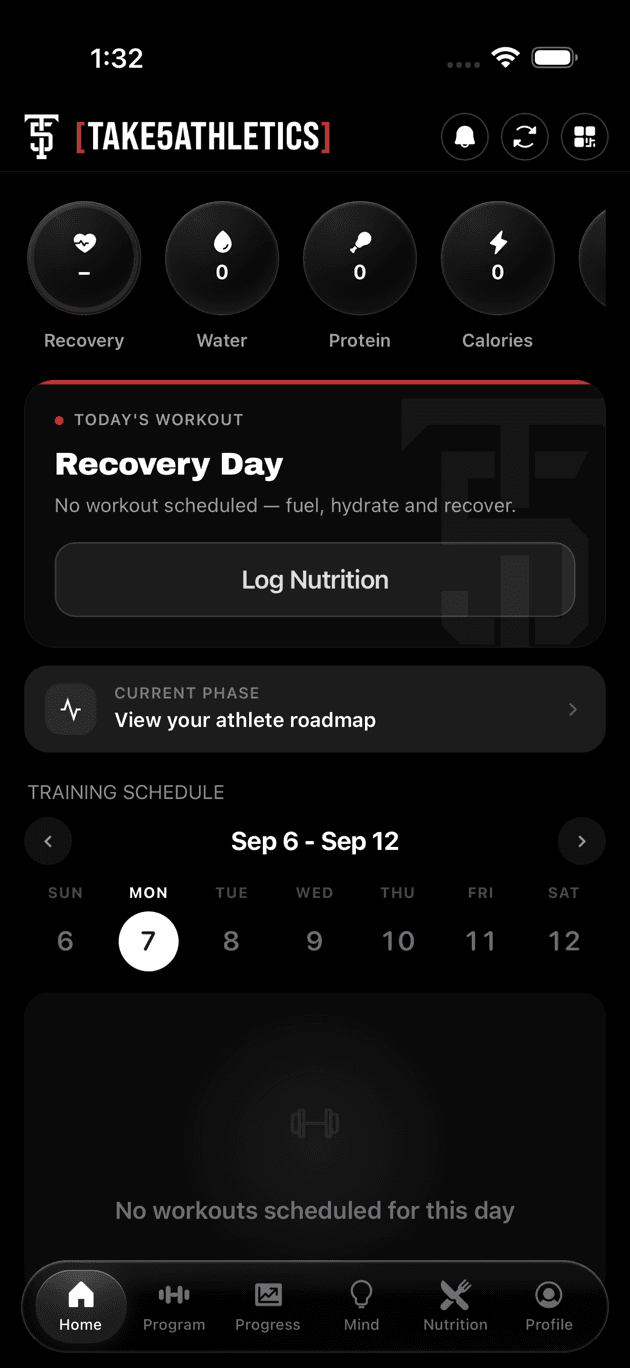
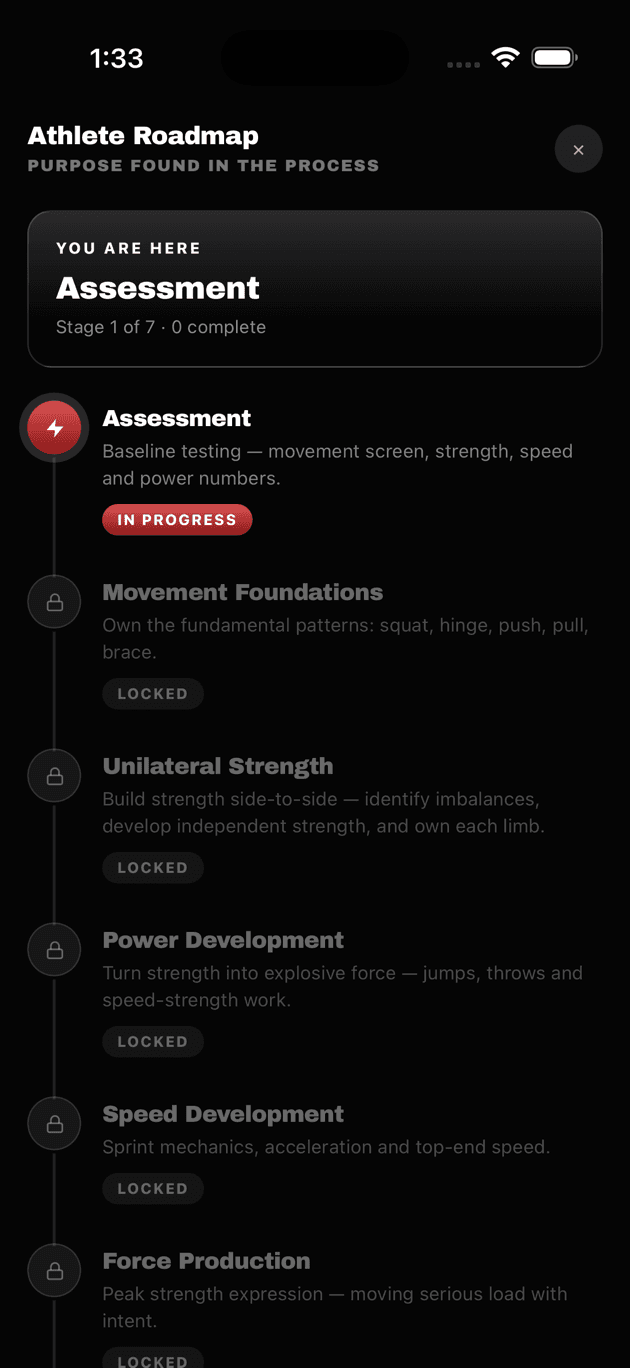
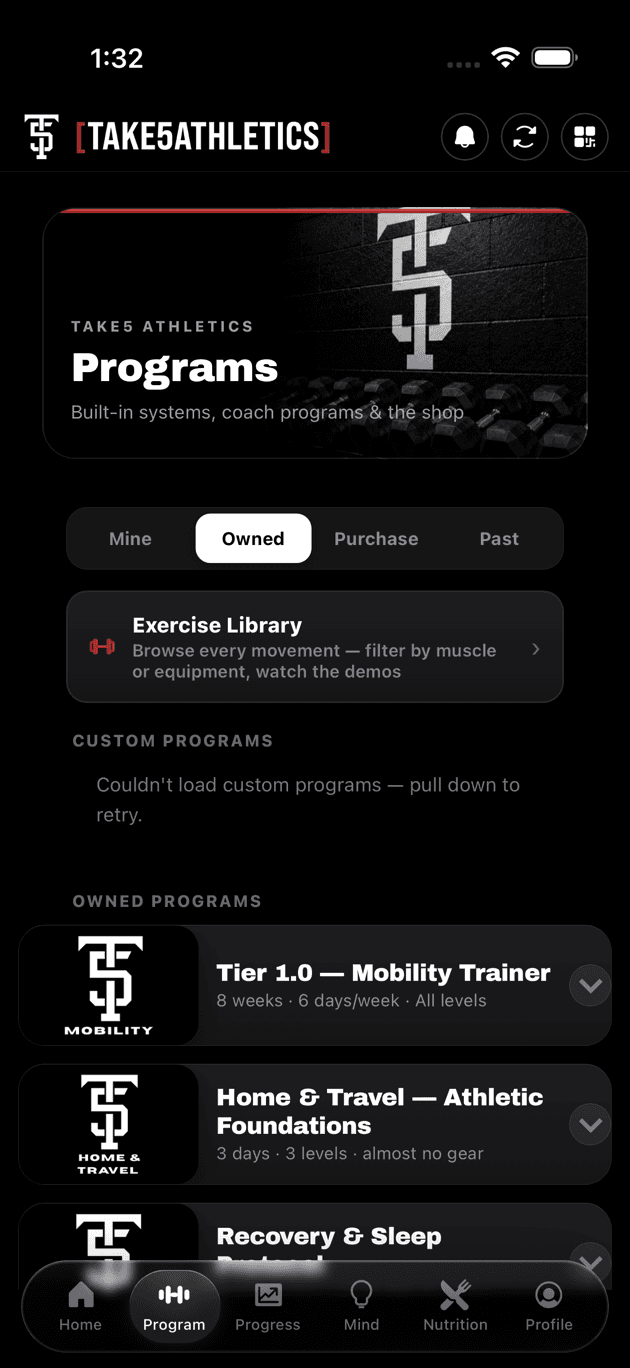
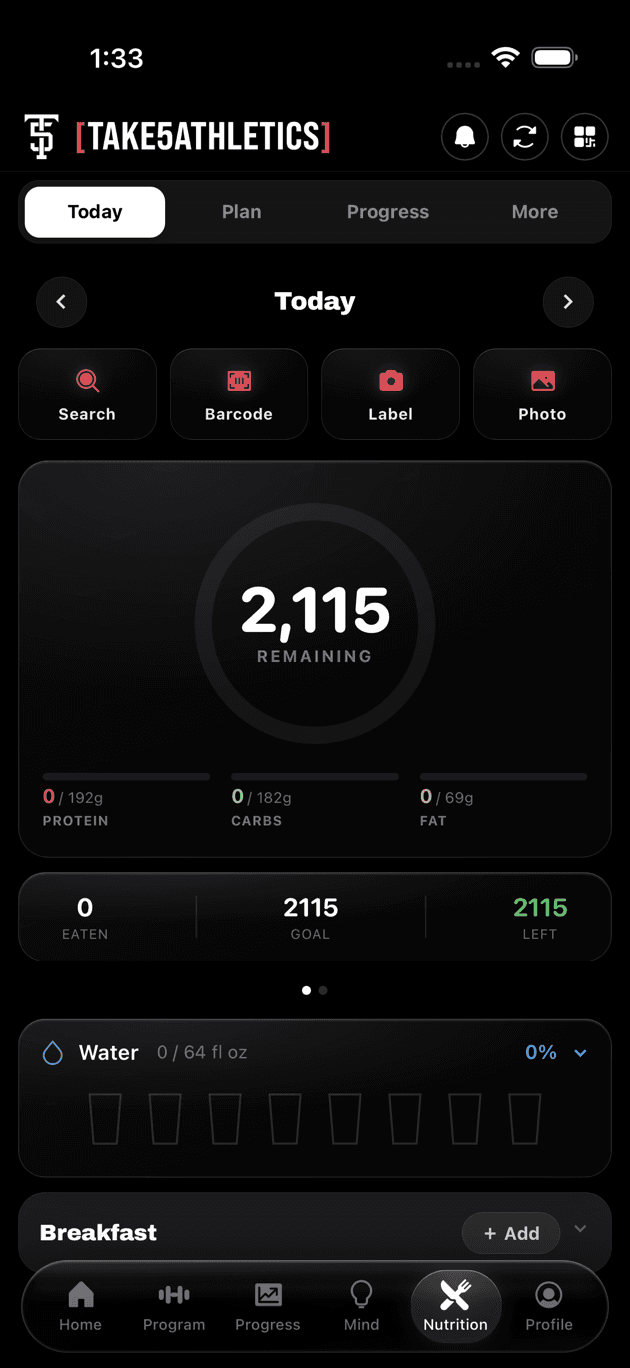
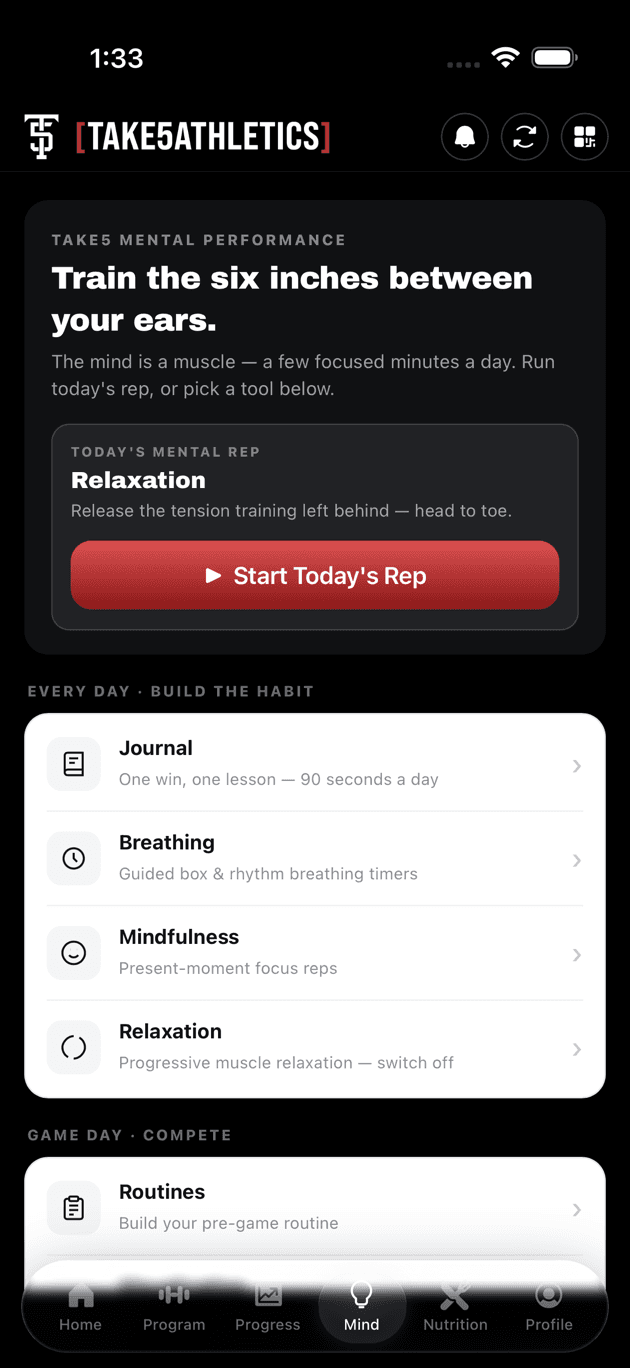
Free with every youth program — set up at the free evaluation, no extra cost, ever.
Free, no commitment, and you will leave with their numbers either way.